
1 / 6
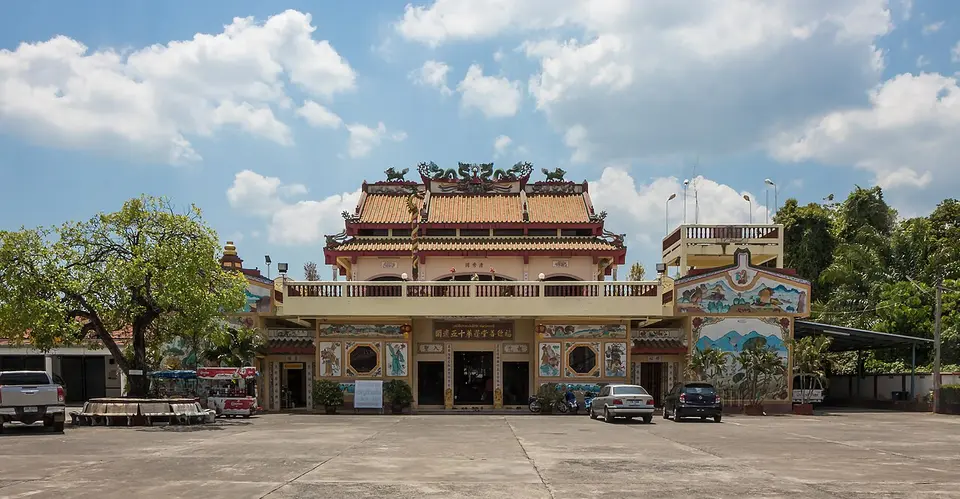
Chinese Temple
Temple · See the city
Temple in the town of Krabi, Thailand
- A good stay is about 40 min
Ratings, photos, and hours load when you open a place. Your account stores only the place id and your note.
Chinese temples are structures used as place of worship of Chinese Buddhism, Taoism, Confucianism, or Chinese folk religion, where people revere ethnic Chinese gods and ancestors. They can be classified as:
miào (廟) or diàn (殿), simply means "temple" and mostly enshrines gods of the Chinese pantheon, such as the Dragon King, Tudigong or Matsu; or mythical or historical figures, such as Guandi or Shennong. cí (祠), cítáng (祠堂), zōngcí (宗祠) or zǔmiào (祖廟), referring to ancestral temples, mostly enshrining the ancestral gods of a family or clan. Taoist temples and monasteries: 觀 guàn or 道觀 dàoguàn; and Chinese Buddhist temples and monasteries: 寺 sì or 寺院 sìyuàn Temple of Confucius which usually functions as both temple and town school: 文廟 wénmiào or 孔廟 kŏngmiào.
Temples of a City God (城隍廟), which worships the patron God of a village, town or a city. Smaller household shrines or votive niche, such as the worship of Zaoshen and Caishen.
Gōng (宮), meaning "palace" is a term used for a templar complex of multiple buildings, while yuàn (院), meaning "institution," is a generic term meaning "sanctuary" or "shrine". Táng (堂) means courtyard or room, and ān (庵) means dome or nunnery.
Visiting
- Time needed
- 40 min
- Closed
- No regular closing day on file
Nearby sights in Krabi
Looking nearby
More nearby Food on Google MapsLooking for travel videos
Sources · Text: Wikipedia (CC BY-SA 4.0) · Ratings, map, nearby food and cafes: Google · Nearby stays and shops: OpenStreetMap