
1 / 2
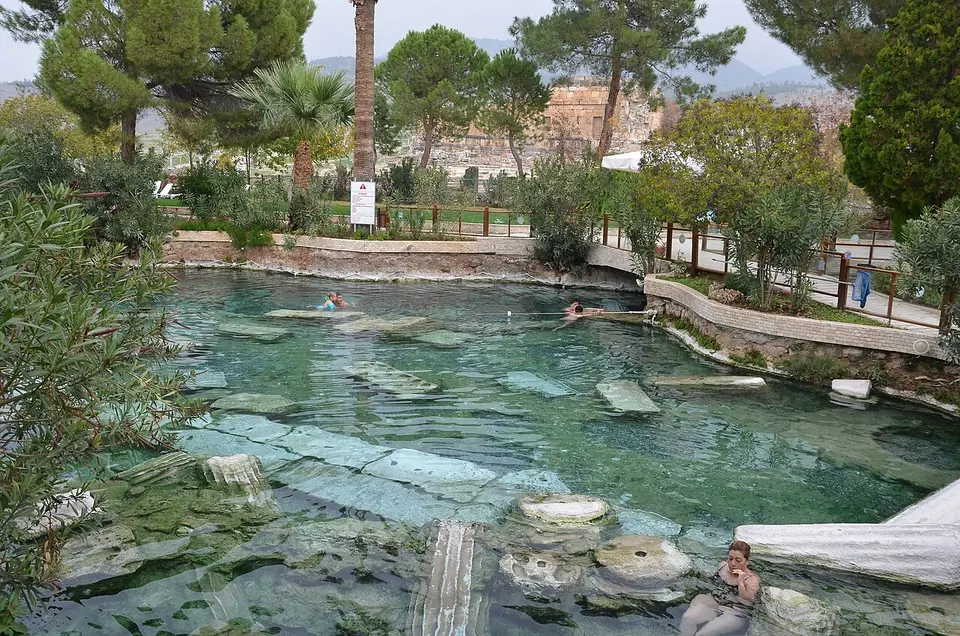
Antique Pool
Hot spring · See the city
Walk on from here
A short walk from here, in order.

- A good stay is about 50 min
Ratings, photos, and hours load when you open a place. Your account stores only the place id and your note.
Hierapolis (; Ancient Greek: Ἱεράπολις 'holy city') was a Hellenistic Greek city in Phrygia, in southwestern Anatolia, Turkey. It was founded in the 3rd century BC, on the site of a Phrygian cult center of the Anatolian mother goddess Cybele, It was famous for its hot springs, its high quality wool fabrics and dyes, and as the birthplace of the Stoic philosopher Epictetus.
Its extensive remains are adjacent to modern Pamukkale in Turkey. The hot springs have been used as a spa since at least the 2nd century BCE, with many patrons retiring or dying there as evidenced by the large necropolis filled with tombs, most famously that of Marcus Aurelius Ammianos, which bears a relief depicting the earliest known example of a crank and rod mechanism, and the Tomb of Philip the Apostle.
Hierapolis-Pamukkale was added as a UNESCO World Heritage Site in 1988. The Italian Archaeological Mission of Hierapolis of Phrygia (MAIER) has operated at the site since 1957 and is currently directed by Grazia Semeraro, Professor of Classical Archaeology at the University of Salento.
Visiting
- Time needed
- 50 min
- Closed
- No regular closing day on file
Nearby sights in Pamukkale
Looking nearby
More nearby Food on Google MapsLooking for travel videos
Sources · Text: Wikipedia (CC BY-SA 4.0) · Ratings, map, nearby food and cafes: Google · Nearby stays and shops: OpenStreetMap